There are some places you visit because they’re beautiful.
Some because they’re historic.
And some because you spent an unreasonable number of hours running across their rooftops as a fictional Renaissance assassin.
Florence, for me, falls firmly into the third category.
I’ve loved Assassin’s Creed II for years, and somewhere along the way its version of Renaissance Florence became one of those fictional places that felt strangely familiar. I knew the rooftops. I knew the piazzas. I knew the churches. I knew exactly where Ezio Auditore da Firenze would inevitably find something to climb.
So when I found myself on a layover in Bologna with a full day to myself – and Florence less than forty minutes away by train – there was never really a question about where I was going.
I had one day in Firenze.
And I was going to spend it following in the footsteps of Ezio Auditore.
After all…
Nothing is true. Everything is permitted.
Although first, breakfast.
Because apparently even assassins need poached eggs and coffee.
Every Good Mission Starts With Breakfast
Before chasing assassins, Templars and 15th-century conspiracies around Florence, I had a considerably more pressing objective.
Breakfast.
I’d technically already walked through Piazza Santa Maria Novella after arriving in Florence, but I wasn’t counting that yet. The mission hadn’t officially begun. I needed food.
So I found a little café near Santa Maria Novella and ordered Cilbir: Turkish poached eggs with flatbread, rocket and cucumber, along with coffee and something cold to drink.
And then Florence gave me my first tiny coincidence of the day.
Sitting beside my coffee was a little sugar packet with Palazzo Vecchio printed on it.
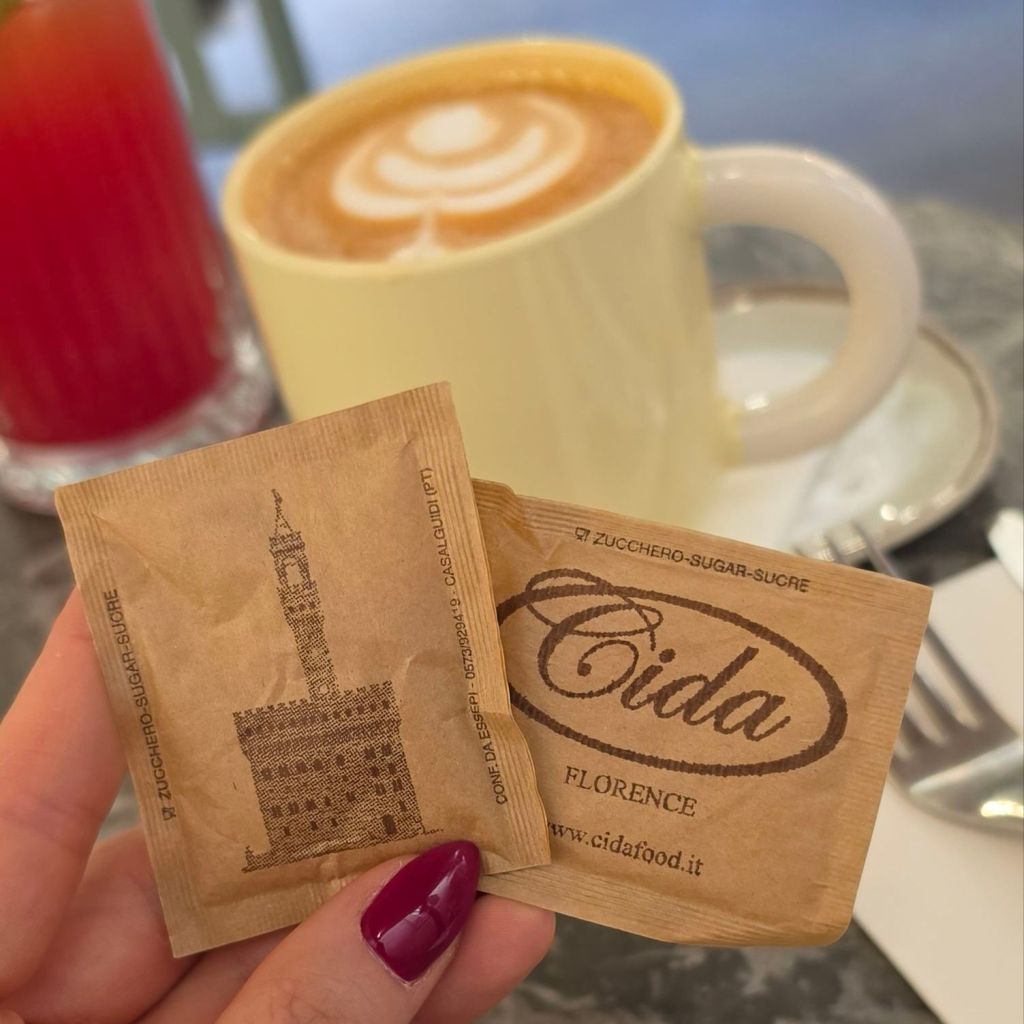
Considering Palazzo Vecchio was already on my Assassin’s Creed route for later that day, I was disproportionately delighted by this.
A tiny preview of a future objective.
Coffee finished. Eggs demolished.
First objective: Santa Maria Novella.
Santa Maria Novella – Where the Conspiracy Begins
I headed back towards Basilica di Santa Maria Novella, one of Florence’s most important churches and the first great basilica built by the Dominican order in the city.
Its distinctive green-and-white marble façade is beautiful enough on its own, but naturally, I wasn’t there solely because of the architecture.
This was Assassin’s Creed II territory.
In the game, Ezio follows La Volpe’s information to Santa Maria Novella after discovering that Francesco de’ Pazzi and the other conspirators are meeting beneath the church.
What follows takes Ezio underground, where he secretly listens to the conspirators and discovers their plan against Lorenzo and Giuliano de’ Medici.
There’s also an Assassin Tomb hidden beneath Santa Maria Novella, containing one of the seals needed to eventually unlock the Armor of Altaïr.
So yes.
Perfectly normal church visit.
For me, though, this was the first proper moment of the day where the Florence I’d known through a screen began overlapping with the Florence standing in front of me.
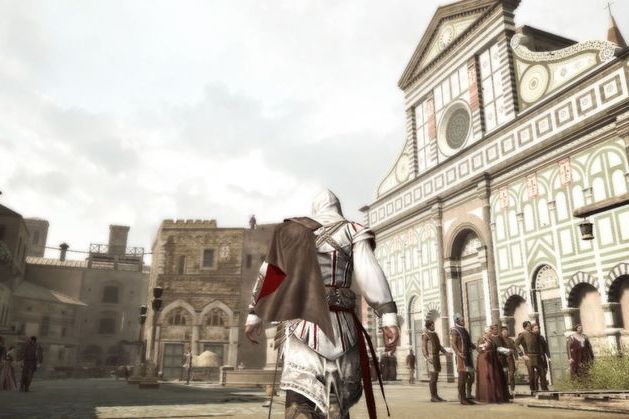
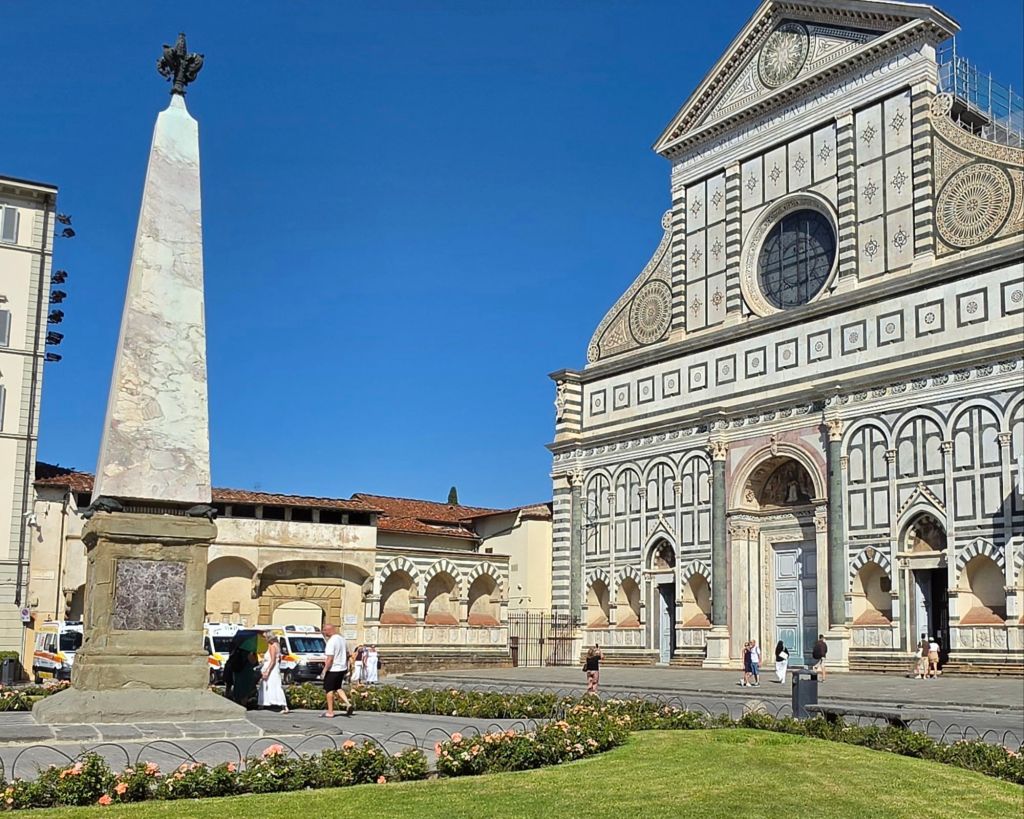
I’d seen this place before.
Except now there was no controller in my hand.
I was actually here.
And the sequence had officially begun.
Into Ezio’s Florence – San Lorenzo
From Santa Maria Novella, I continued deeper into the historic centre towards Basilica di San Lorenzo.
San Lorenzo is one of the oldest churches in Florence and is inseparable from the history of the Medici family. Generations of the family were buried here, and the complex would eventually become home to the magnificent Medici Chapels.
For Assassin’s Creed fans, the area appears again during Ezio’s story, including during the later Bonfire of the Vanities sequence when Florence has fallen under the control of Savonarola.
But this stop was less about recreating one particular mission and more about that strange sense of recognition that kept following me around the city.
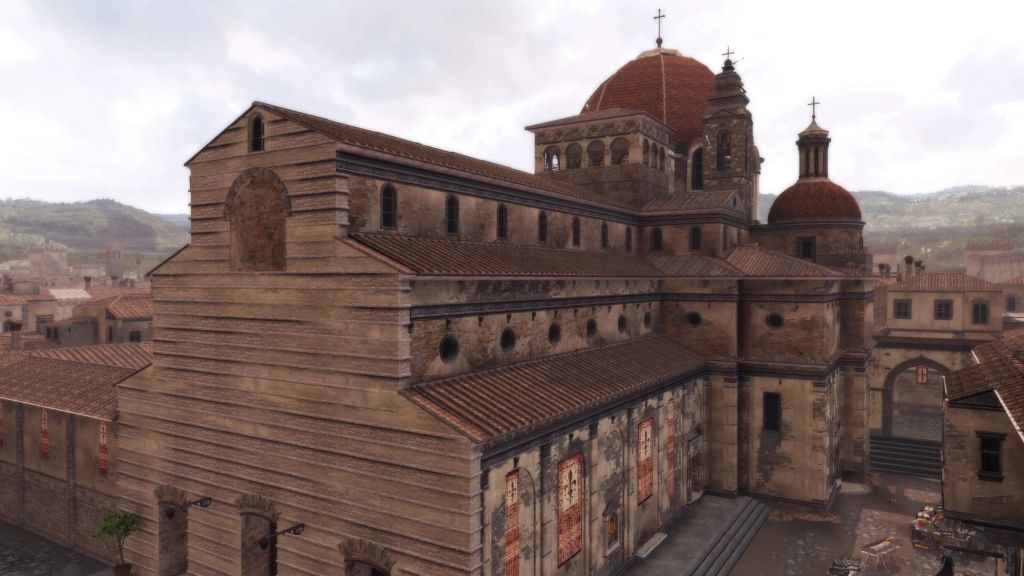
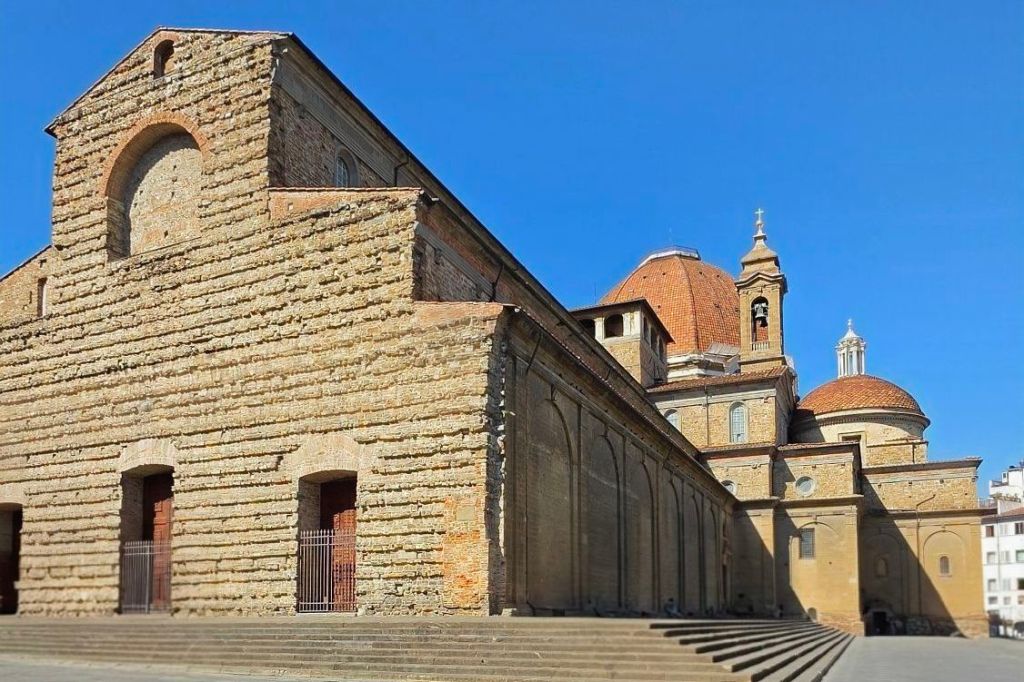
I was walking through streets I’d technically walked through countless times before.
Only this time there were no guards shouting at me.
Which was helpful.
Palazzo Medici Riccardi – Stepping Into the Story
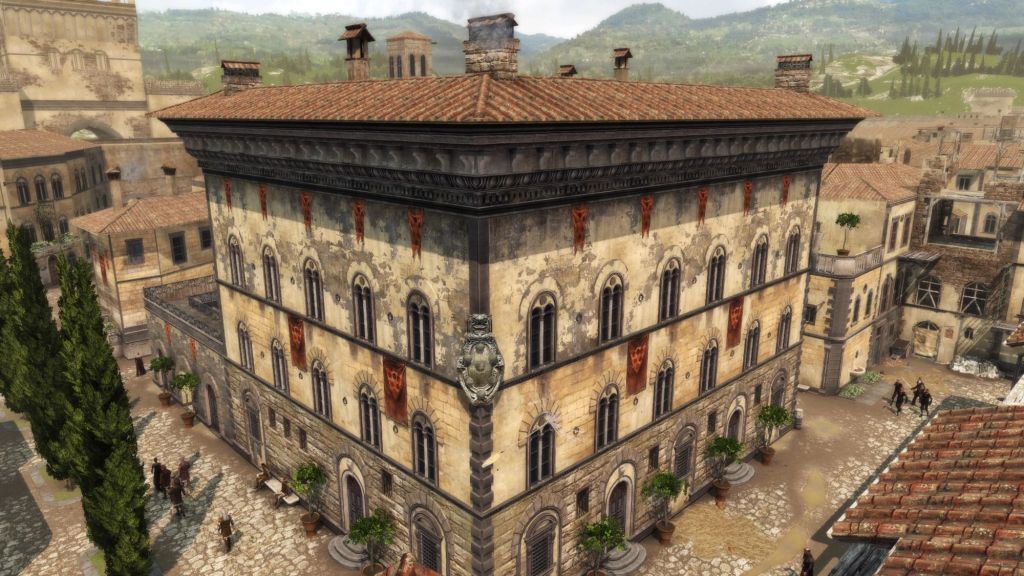
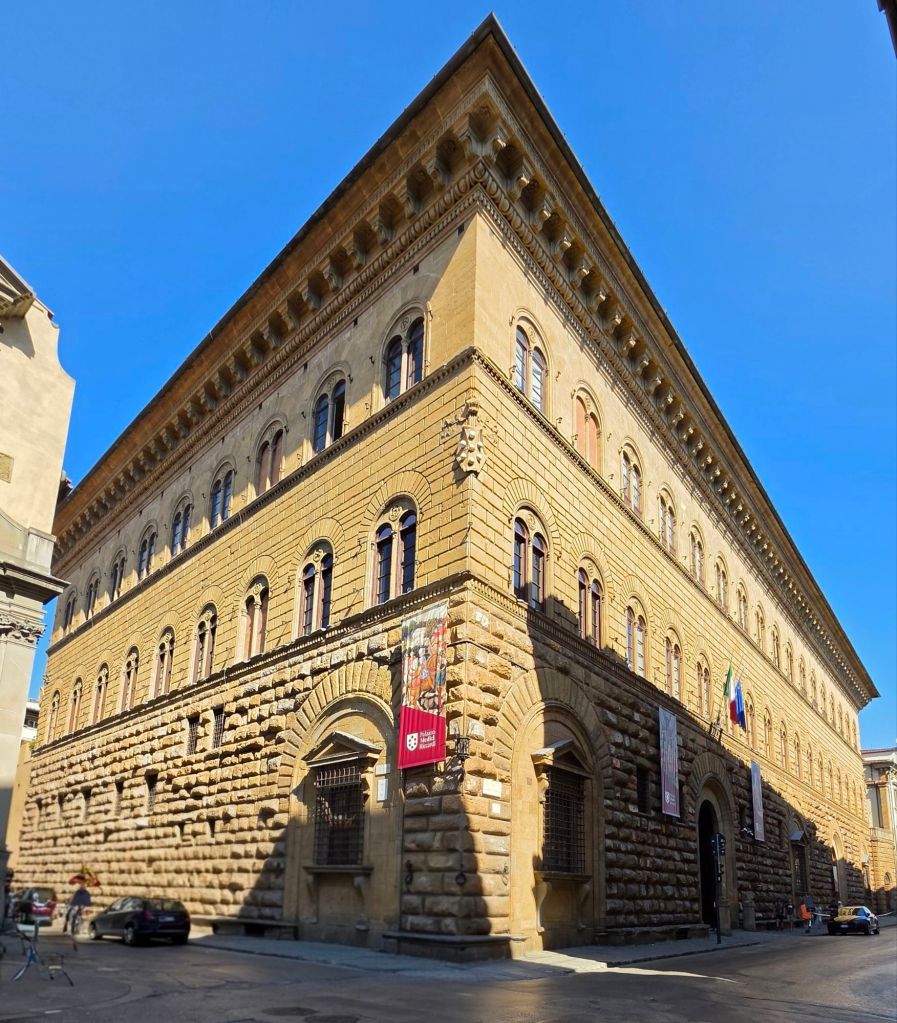
Next came Palazzo Medici Riccardi.
Built for Cosimo de’ Medici in the 15th century and designed by Michelozzo, the palace became the Medici family’s principal residence and one of the great symbols of their influence in Renaissance Florence.
And this time, I went inside, but only into the courtyard.
Walking into it was one of those moments where the Assassin’s Creed version of Florence suddenly felt very close.
In Assassin’s Creed II, the Medici residence becomes the scene of an attack by Pazzi loyalists. Ezio fights his way through the attackers and helps rescue Lorenzo de’ Medici.
Later, after dealing with the remaining Pazzi conspirators, Ezio meets Lorenzo again in the courtyard and receives the Medici cape.
And now I was standing in it.
There’s something genuinely strange about making real memories in a place where you somehow feel as though you already have memories.
Of course, mine weren’t real.
They belonged to Ezio.
But that’s the funny thing about games you spend enough time inside. Their worlds lodge themselves somewhere in your brain alongside actual places you’ve visited.
And suddenly I was replacing those fictional memories with my own.
The Duomo – Where History and Assassin’s Creed Collide
And then there was the Duomo.
There are buildings you can prepare yourself for.
The Cathedral of Santa Maria del Fiore isn’t really one of them.
Its sheer scale is ridiculous.
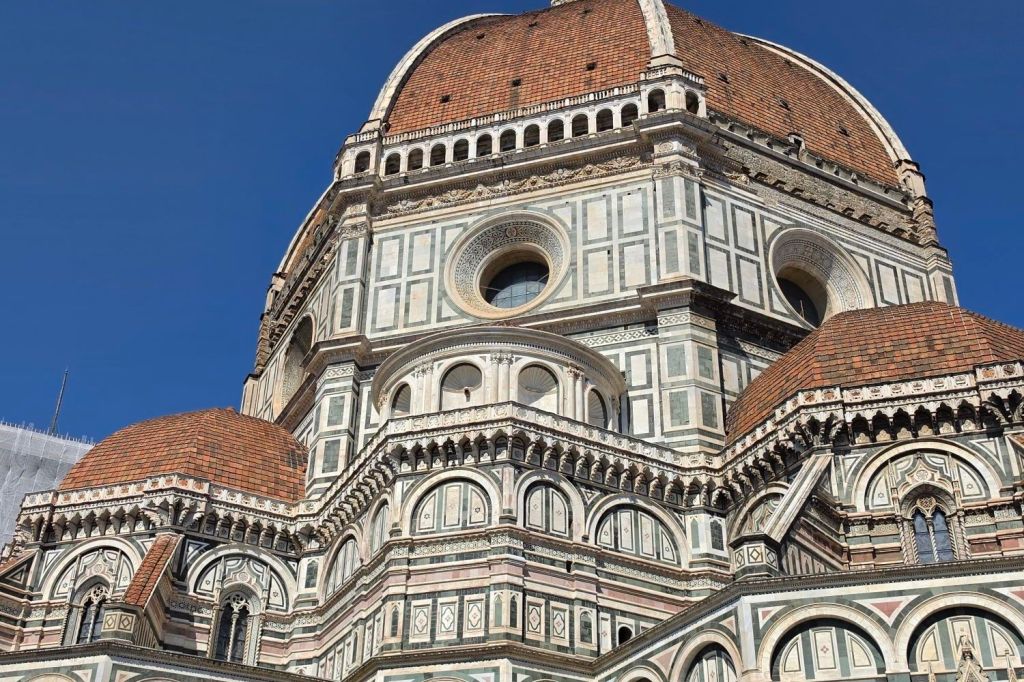
Construction began at the end of the 13th century, but it was Filippo Brunelleschi’s enormous dome , constructed during the 15th century without the traditional wooden framework normally required to support a structure of that size, that would become one of the defining achievements of Renaissance architecture.
And standing underneath it, you understand why.
It’s enormous.
It’s intricate.
It’s completely unmistakable.
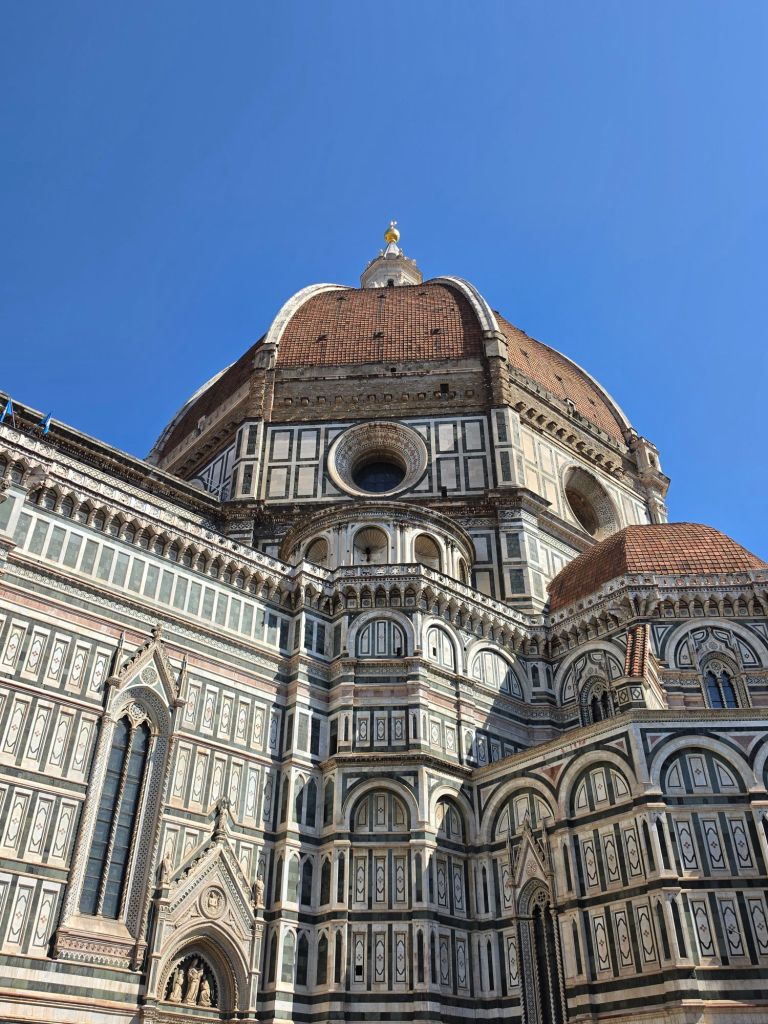
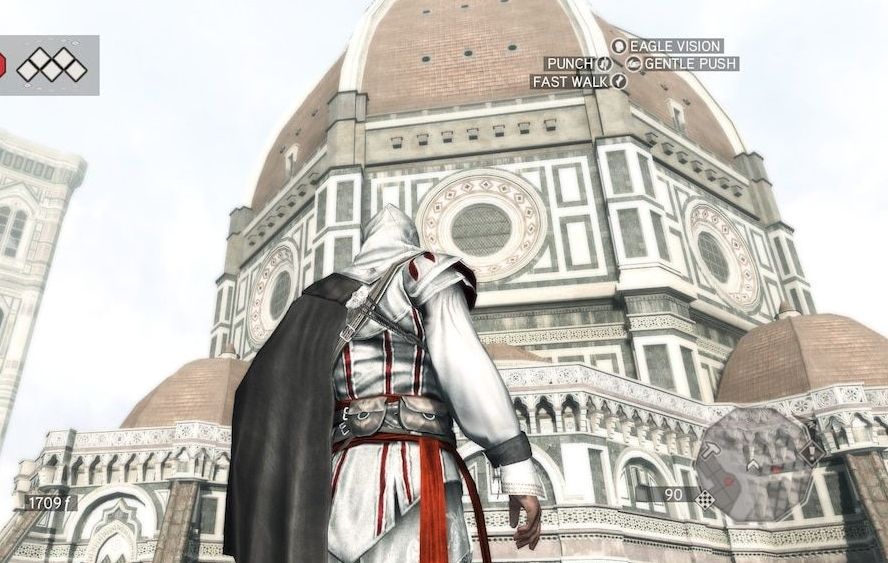
And for me, inevitably, it was also one of the most recognisable and iconic landmarks from Assassin’s Creed II.
But this is also one of the places where the game’s fictional story collides particularly closely with real history.
On 26 April 1478, during Mass inside Florence Cathedral, members of the Pazzi conspiracy attacked Lorenzo and Giuliano de’ Medici.
Giuliano was killed.
Lorenzo survived.
The conspiracy was real.
The people were real.
The violence was real.
Assassin’s Creed II, naturally, inserts Ezio directly into the middle of it.
In the game, he witnesses the attack, fights alongside Lorenzo and helps get him to safety, before the story sends him after the conspirators responsible.
And much later, during the Bonfire of the Vanities, Ezio finds himself climbing Brunelleschi’s dome itself.
Which meant that while everyone else around me was presumably admiring one of the masterpieces of Renaissance architecture, a small part of my brain was inevitably assessing its climbability.
Occupational hazard.
For fictional assassins, anyway.
But the Duomo was also where I really began appreciating just how clever the setting of Assassin’s Creed II had been.
The game hadn’t made me interested in a fictional city.
It had made me interested in a real one.
And now I was standing inside the history that inspired it.
Aperol with a View
After spending the morning following conspiracies, assassinations and the Medici family through Renaissance Florence, I decided it was time for a brief intermission.
And by intermission, I mean an Aperol Spritz.
I’d been determined to find somewhere above the streets where I could sit for a while and properly take Florence in , ideally with a drink in my hand, and somehow I ended up finding exactly that.
A rooftop overlooking the city.
After hours spent looking up at Florence, suddenly I was looking across it.
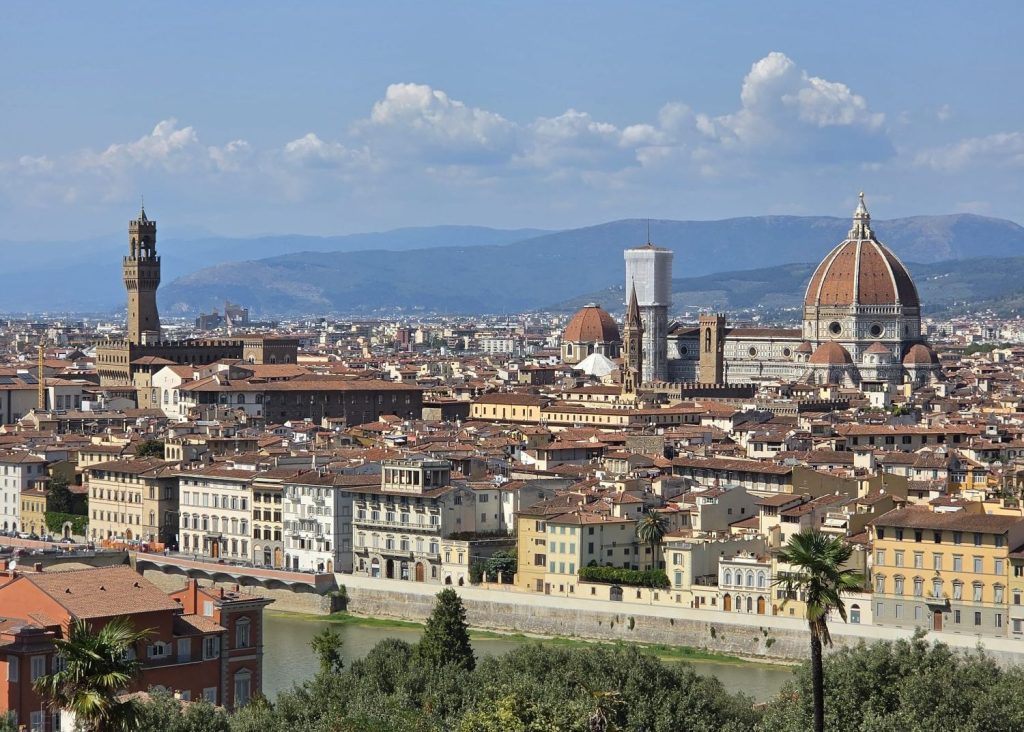
Terracotta rooftops stretched out below me, towers and church domes broke through the skyline, and there in the middle of it all was Brunelleschi’s enormous red dome, the same landmark I’d only just been standing underneath.
So I ordered an Aperol Spritz, found myself a spot overlooking the city and stopped.
Actually stopped.
No next objective. No Google Maps open. No trying to work out which street Ezio would have disappeared down.
Just me, an Aperol and Florence.
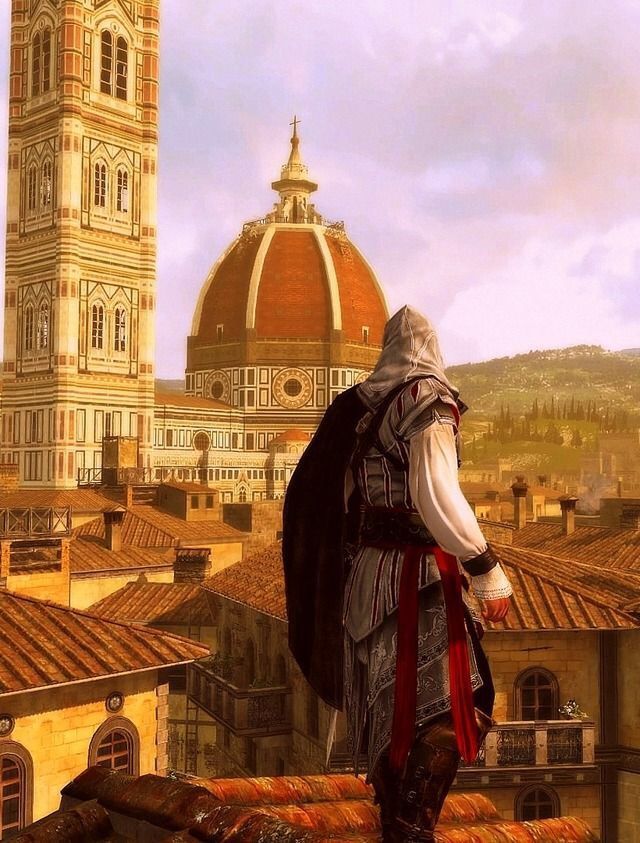
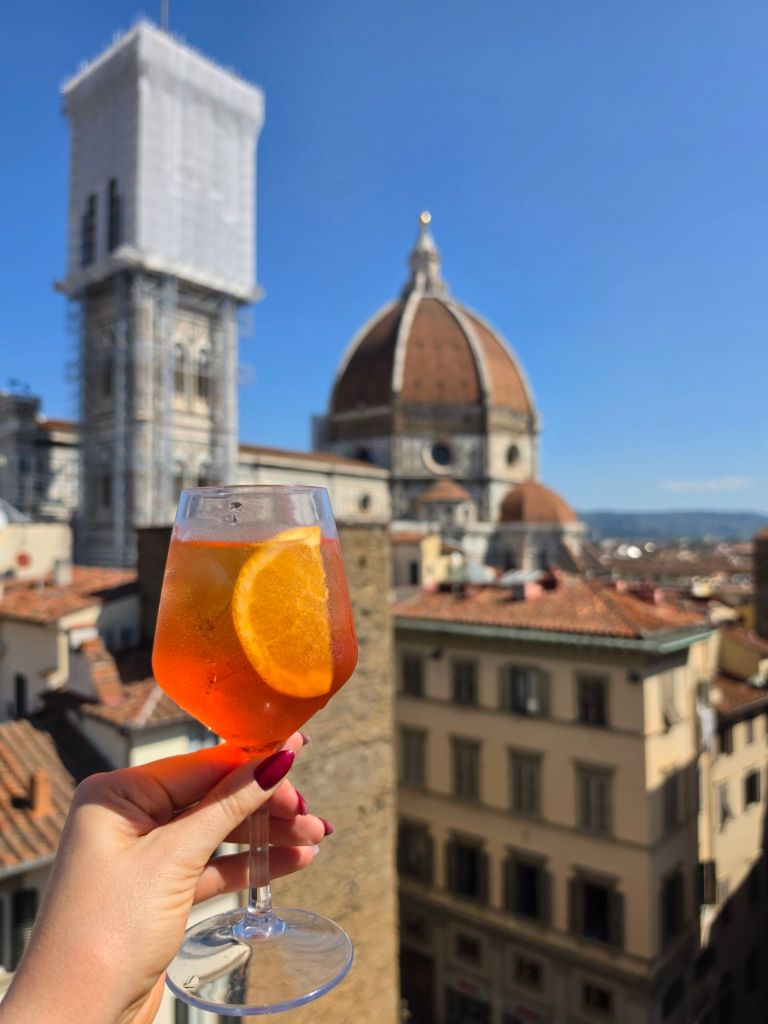
And sitting there, looking out over those rooftops, I couldn’t help thinking about one of my favourite moments from the very beginning of Assassin’s Creed II.
Ezio and his brother Federico climb above Florence together and look out across their city.
“It is a good life we lead, brother.”
Knowing what happens to the Auditore family shortly afterwards makes that little moment painfully bittersweet. It’s the last glimpse of Ezio’s old life before everything changes.
But sitting there in Florence myself, that first line kept coming back to me.
It is a good life we lead.
And maybe it was the Aperol talking, but I felt it.
Because there I was.
On a random Monday afternoon in Florence, looking across a city I’d known through a video game long before I’d ever known it for myself.
I’d spent the morning chasing pieces of Ezio’s story through Renaissance streets. The Duomo was sitting right there in front of me. I had nowhere else I needed to be at that exact moment.
And life felt pretty fucking good.
So I sat there a little longer.
I drank my Aperol.
I looked out across Firenze.
And quietly appreciated just how surreal it was that a city I’d once explored from my sofa was now spread out beneath me.
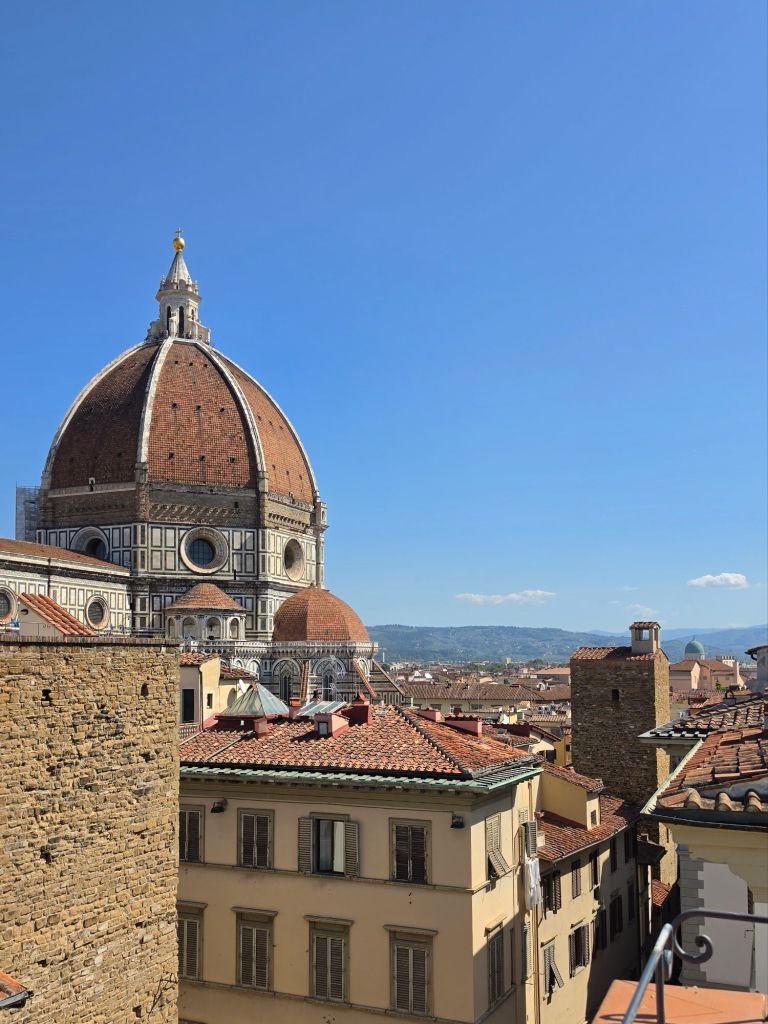
Eventually, though, it was time to leave the rooftop.
There were still a few more sequences to complete.
And Florence, as it turned out, had quite a few side quests waiting for me too.
Back to the Mission – Palazzo Vecchio
My next stop was Piazza della Signoria and Palazzo Vecchio.
And if you’ve played Assassin’s Creed II, this one hurts.
Palazzo Vecchio has stood at the centre of Florentine political life for centuries, dominating Piazza della Signoria with its fortress-like walls and enormous Arnolfo Tower.
But in Ezio’s story, this is where everything changes.
Early in the game, Ezio’s father Giovanni and his brothers Federico and Petruccio are arrested after being betrayed.
Ezio desperately tries to save them, believing he has delivered the evidence needed to prove their innocence.
Instead, he arrives in Piazza della Signoria to find them on the scaffold.
And watches his father and brothers hang.
It’s one of the defining moments of the entire game. The carefree young Ezio we meet at the beginning loses almost everything in that piazza, setting him on the path that ultimately shapes the rest of his life.
And suddenly that line from the rooftop felt even more poignant.
It is a good life we lead, brother.
Standing there in person felt surprisingly strange.
The Auditore family may be fictional, but Piazza della Signoria’s history as the political heart of Florence is very real. For centuries this was a place of government, public ceremony, conflict and punishment, which makes it an incredibly fitting setting for one of the darkest moments of Ezio’s story.
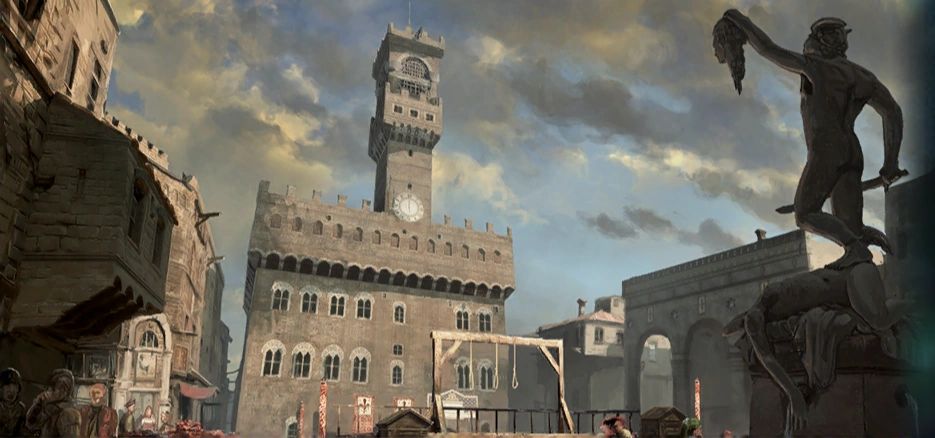
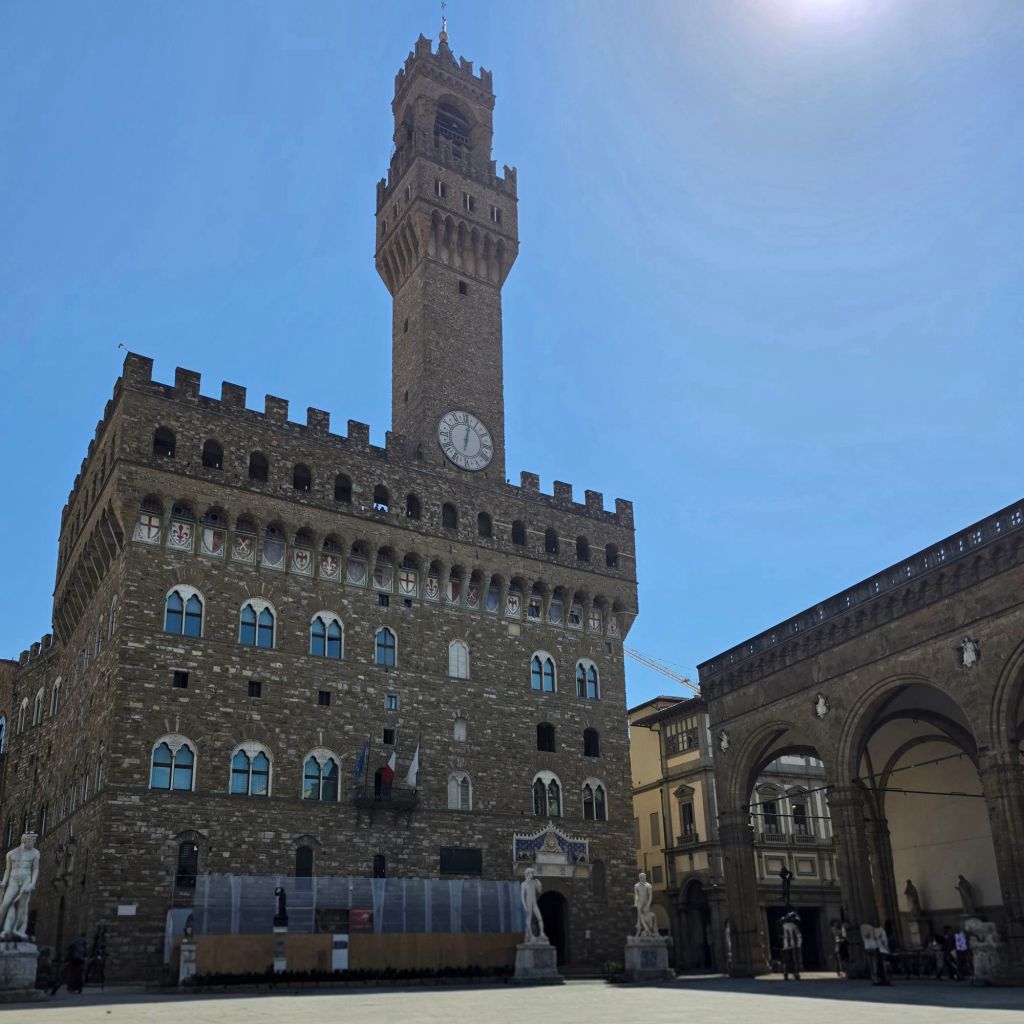
It also occurred to me that the cute little Palazzo Vecchio sugar packet I’d been disproportionately excited about over breakfast now had a considerably darker association.
Thanks, Florence.
An Italian Leather Side Quest
From Piazza della Signoria, I started making my way towards the Arno and my next destination: Ponte Vecchio.
And somewhere along Via Por Santa Maria, the sequence was temporarily interrupted.
By a handbag.
I wandered into Pratesi Firenze, where I found the most beautiful little Italian leather bag – deep red, perfectly structured, with gold hardware and just enough of that tiny classic top-handle silhouette to make me fall immediately in love with it.
Did buying a handbag feature anywhere on my carefully planned Assassin’s Creed II itinerary?
No.
Did I need a little Italian leather treasure from Florence?
Apparently, yes.
And honestly, this is my favourite kind of souvenir.
I didn’t particularly want something that simply said Firenze across the front of it. I wanted something I’d actually use, something that, months or years from now, I can pull out of my wardrobe and remember exactly where I found it.
A little red leather bag bought while wandering through the streets of Florence on the day I went looking for Ezio Auditore.
Perfect.
SIDE QUEST COMPLETE: ITALIAN LOOT ACQUIRED.
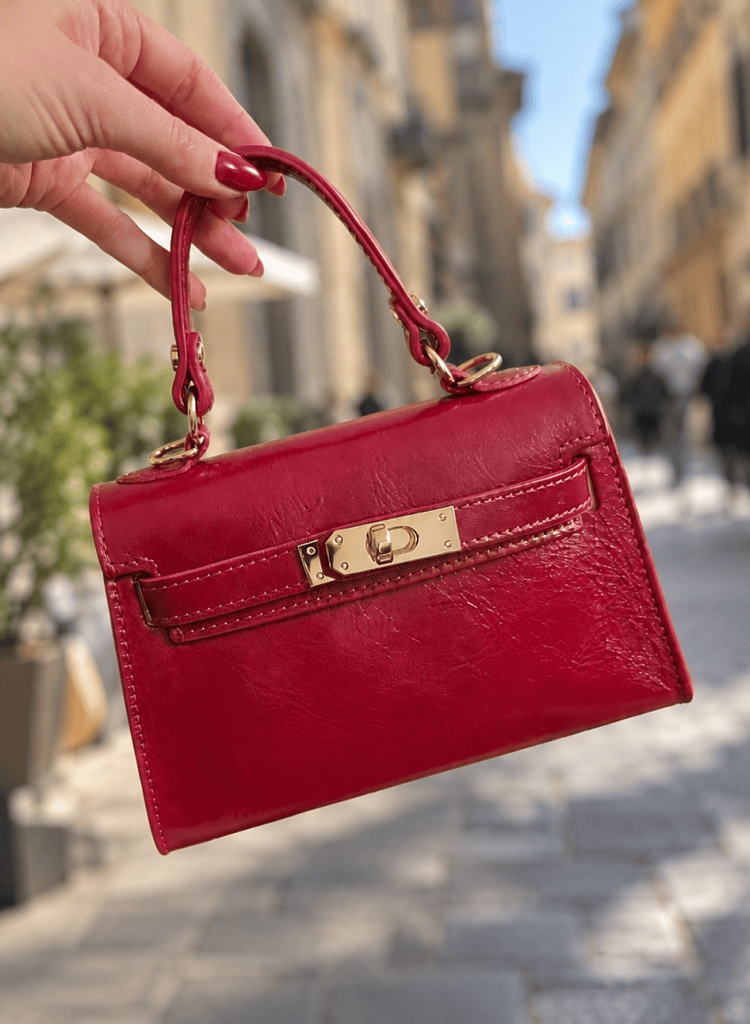
Bag secured, it was time to continue towards the Arno.
Ponte Vecchio
And then I reached one of those places that almost doesn’t need an introduction.
Ponte Vecchio.
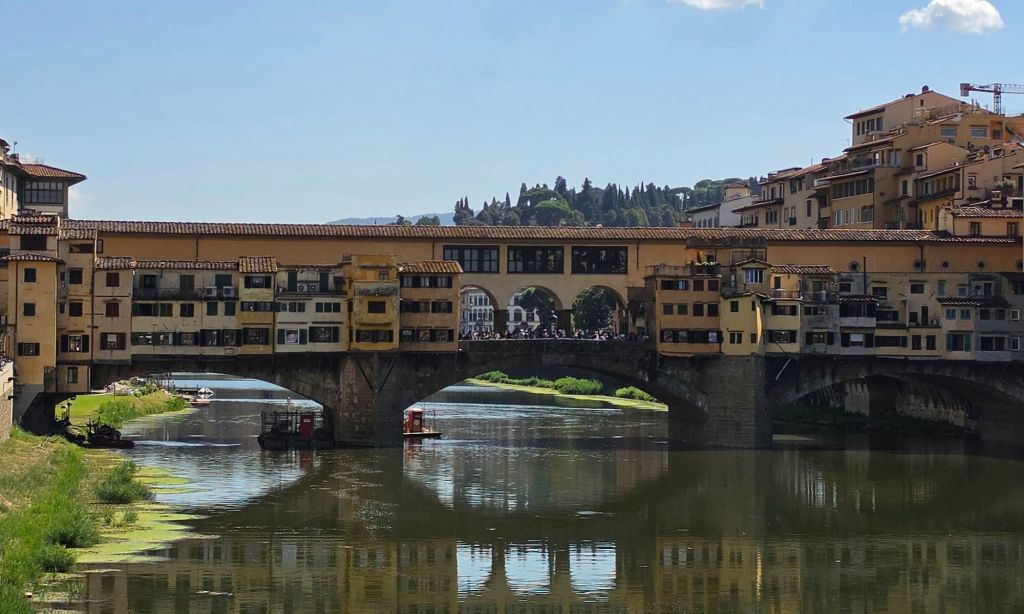
Spanning the Arno, the medieval bridge is one of the most recognisable sights in Florence. Shops have lined the bridge for centuries, and today its tiny storefronts are predominantly occupied by jewellers and goldsmiths.
It is unmistakably Florence.
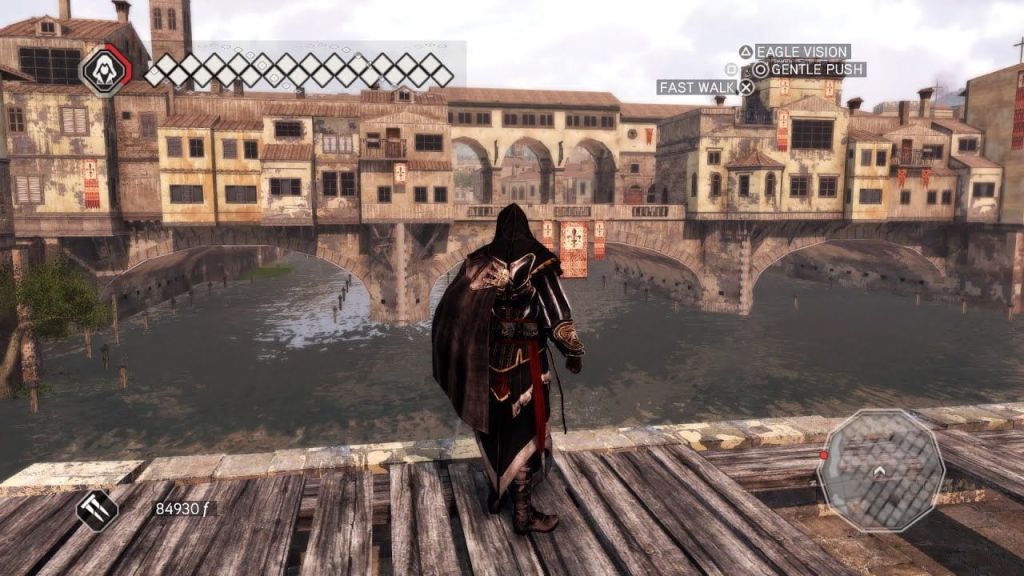
And, naturally, it’s also part of Ezio’s.
The bridge and surrounding streets form part of the Florence you explore throughout Assassin’s Creed II, and by this stage of the day I’d realised that I didn’t necessarily need a major mission to have happened at every location for it to feel significant.
Sometimes it was simply the recognition.
I’ve crossed this bridge before.
Except last time I was controlling a Renaissance assassin.
This time I was carrying a brand-new red handbag.
Slightly different inventory.
With my upgraded inventory in hand, I continued through Florence and into the next sequence.
Santa Croce – One Last Piece of Ezio’s Florence
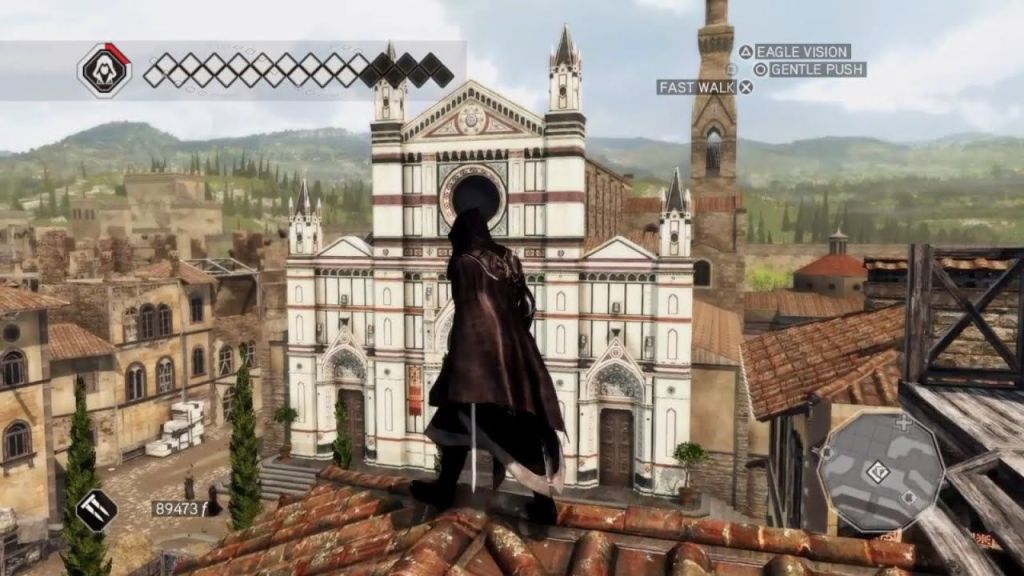
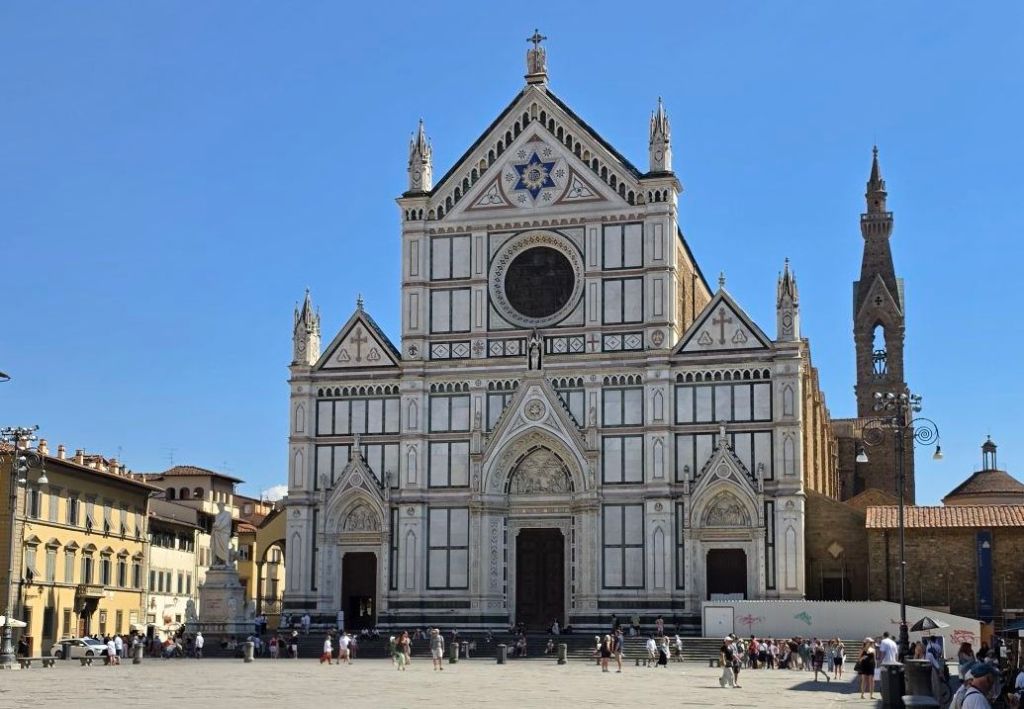
My final major Assassin’s Creed II stop of the day brought me to Basilica di Santa Croce.
By this point, Florence had already given me Renaissance palaces, political conspiracies, one of the most famous bridges in the world and, somewhat unexpectedly, a new handbag.
But Santa Croce was another reminder that the real history behind Ezio’s Florence is every bit as fascinating as the fictional one.
The basilica is one of Florence’s most important churches and has become the final resting place of some extraordinary figures from Italian history.
Michelangelo is buried here.
So is Galileo.
Machiavelli too.
It’s sometimes described as a kind of temple to Italy’s greats, and standing outside it, you begin to understand just how many layers of history are packed into this relatively small part of Florence.
For Assassin’s Creed II players, though, Santa Croce and its surrounding district are also instantly familiar as part of the Florence Ezio moves through.
And by now, I’d started noticing something about this little pilgrimage of mine.
I’d come to Florence wanting to see the places I’d fallen in love with through Assassin’s Creed II.
But somewhere along the way, the relationship had almost reversed.
The game had brought me to these places.
The real Florence was making me want to know more about them.
That, I think, is part of the magic of games like Assassin’s Creed.
Yes, Ezio is fictional. Yes, the games take liberties with history.
But underneath all of it are real buildings, real families, real artists, real conspiracies and a city that somehow survived centuries of change while keeping so much of its identity intact.
My Assassin’s Creed route was essentially complete.
There was only one place I’d decided I wanted to finish the day.
Piazzale Michelangelo.
High above Florence, with the city spread out beneath it.
If there was ever going to be a real-life synchronisation point, surely that was it.
But before beginning the climb, Florence presented me with one more side quest.
And this one came with alcohol.
The Wine Windows of Florence
I’d already noticed a few of them during the day.
Tiny openings in the walls of old Florentine buildings, some sealed, some decorated, some so easy to miss that once I started paying attention to them, I kept having that little: Oh! There’s another one.
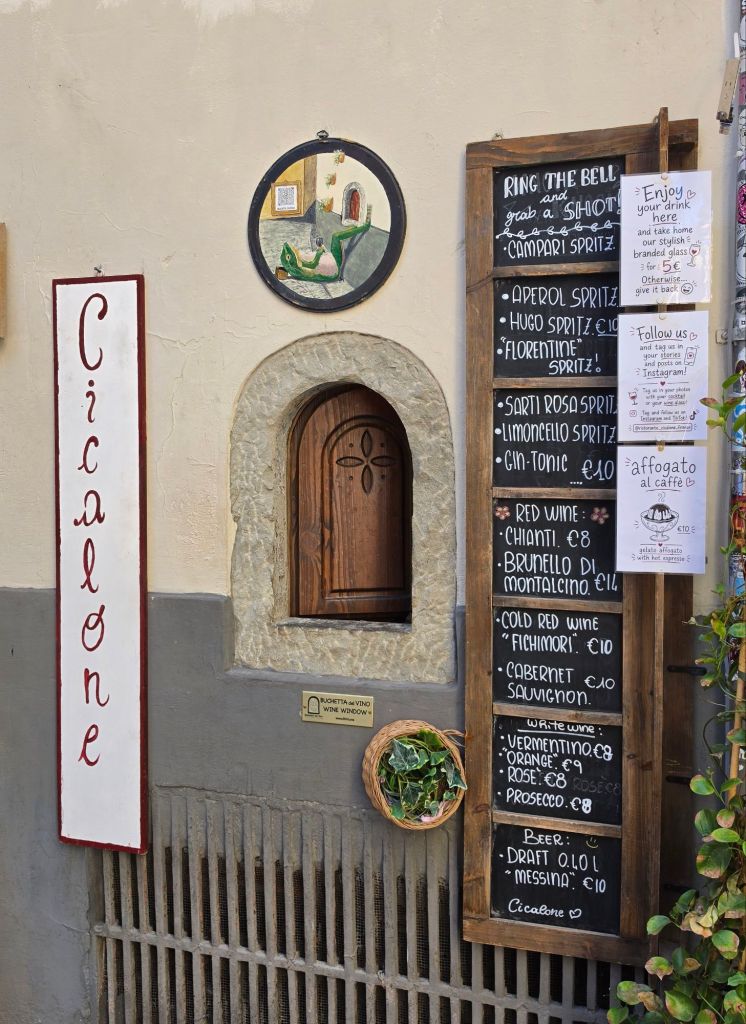
They’re known as buchette del vino – Florence’s little wine windows.
And they’re not a modern tourist gimmick.
Their history stretches back centuries, when Florentine wine-producing families used these little openings to sell wine directly from their palaces to customers on the street.
Hundreds of historic wine windows have been documented across Florence and Tuscany, although only a much smaller number operate as actual wine windows today.
Which is why finding one that’s genuinely in use feels particularly fun.
I’d seen a couple already.
But then, on my way towards Piazzale Michelangelo, I found one at Borgo dei Greci 1/A with something the others hadn’t had.
A tiny bell.
Well.
Obviously I rang it.
A little while later, the hatch opened and through this centuries-old hole in a Florentine wall came…
An Aperol Spritz.
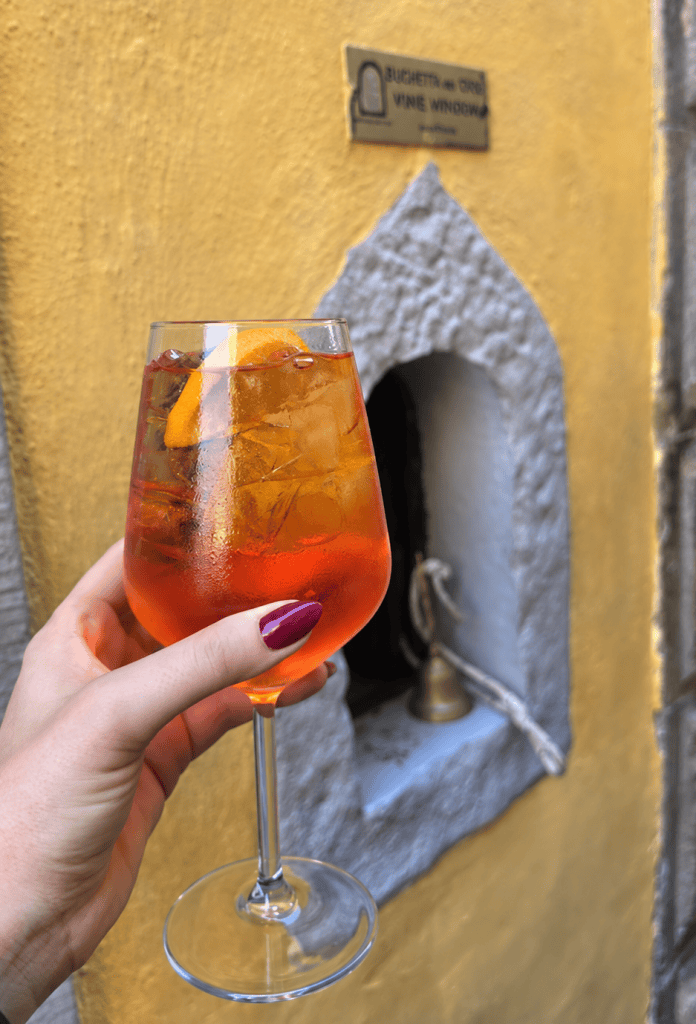
In a proper wine glass.
I was delighted.
There was something wonderfully absurd about it. I’d spent the day learning about Renaissance Florence, and now Florence had apparently decided to demonstrate its history by handing me alcohol through the side of a building.
This was Aperol number two of the day, after the rooftop earlier.
Perfectly reasonable.
At this point.
I stood outside with my glass, thoroughly pleased with myself for finally trying a working wine window.
And then the people inside realised I was on my own.
They invited me in.
This should probably have been my first indication that the side quest had not, in fact, been completed.
The Side Quest Escalates
Once inside, I sat down and they very kindly brought me some water.
Excellent. Responsible. Hydration.
And then I somehow ended up with another spritz.
This one was fruity, possibly mango or passion fruit, although I can’t say for certain, and very nice.
Which brought the running total to three spritzes.
Somewhere around the third one, “everything is permitted” was beginning to feel less like an Assassin’s Creed maxim and more like a questionable approach to afternoon drinking.
At some point, I had the increasingly important realisation that my alcohol consumption was beginning to significantly outperform my food consumption.
I still had to walk up a hill.
In Florence.
In roughly 35-degree heat.
This felt like information I should probably act upon.
So I ordered bread with olive oil and balsamic vinegar and sat there attempting to restore some kind of nutritional diplomacy to the situation.
Eventually, sufficiently breaded and very aware that I still had somewhere to be, I asked for the bill.
They brought me a limoncello.
Because apparently that was the answer to everything.
I drank the complimentary shot, thanked them profusely and, when the possibility of any further alcohol presented itself, decided that this was where I needed to draw the line.
No.
Absolutely not.
I had a synchronisation point to reach.
So, to recap:
One rooftop Aperol. Two more spritzes. One limoncello. One portion of emergency bread.
And one woman who had somehow convinced herself that the sensible next activity was climbing to one of the highest viewpoints in Florence in 35-degree heat.
I stepped back outside.
Opened the route to Piazzale Michelangelo.
Looked at the hill.
And realised what I’d done.
There was no fast travel available.
No horse.
No conveniently positioned stack of hay.
And, regrettably, no Ezio to do the climbing for me.
I’d come this far.
I wasn’t backing out now.
CONTRACT ACCEPTED
FINAL OBJECTIVE: REACH THE SYNCHRONISATION POINT
Sequence Complete: Piazzale Michelangelo
There are decisions that seem perfectly reasonable when you’ve had three spritzes and a complimentary limoncello.
Climbing a hill in approximately 35-degree heat, apparently, was one of mine.
Piazzale Michelangelo sits above the city on the south side of the Arno and is famous for its panoramic view across Florence.
It has absolutely nothing to do with Assassin’s Creed II.
But look at it.
A huge viewpoint sitting high above Firenze, with the entire city spread out beneath you?
There was only one thing it could possibly be.
My final synchronisation point.
And so I started climbing.
It became apparent almost immediately that perhaps I had underestimated this part of the itinerary.
The alcohol wasn’t exactly helping.
Neither was the heat.
Neither was the fact that I’d already spent most of the day walking around Florence and was approaching 12,000 steps before I’d even properly tackled the hill.
Up I went. And up. And up.
At this point, my skirt was sticking to me, I was sweating in places I didn’t know were capable of sweating, and I was beginning to question why I had apparently accepted a fucking Assassin’s Creed contract that nobody had actually offered me.
Ezio made this look considerably easier.
Although, to be fair, Ezio also had the ability to scale the side of a cathedral using suspiciously convenient pieces of masonry.
I had stairs.
Lots of stairs.
Still, there was no abandoning the objective now.
I’d spent the entire day following Ezio Auditore through Florence. I’d walked through the places that inspired his story. I’d stood beneath the Duomo, crossed Ponte Vecchio, wandered through Piazza della Signoria, explored Palazzo Medici, acquired some Italian loot and completed a wine-window side quest that had become considerably more alcoholic than anticipated.
I was getting to the top of that bloody hill.
Checkpoint Reached: The Rose Garden
Somewhere along the climb, I reached Giardino delle Rose – Florence’s Rose Garden.
And at that particular moment, it felt less like a garden and more like a checkpoint.
The garden sits on the hillside beneath Piazzale Michelangelo, with paths winding through roses and greenery and little glimpses of Florence appearing between the trees.
It was beautiful.
It was peaceful.
And, most importantly, it gave me an excuse to stop climbing for a minute without admitting that I needed to stop climbing for a minute.
So obviously I took it.
For the first time since leaving the wine window, I properly looked back.
And there was Florence.
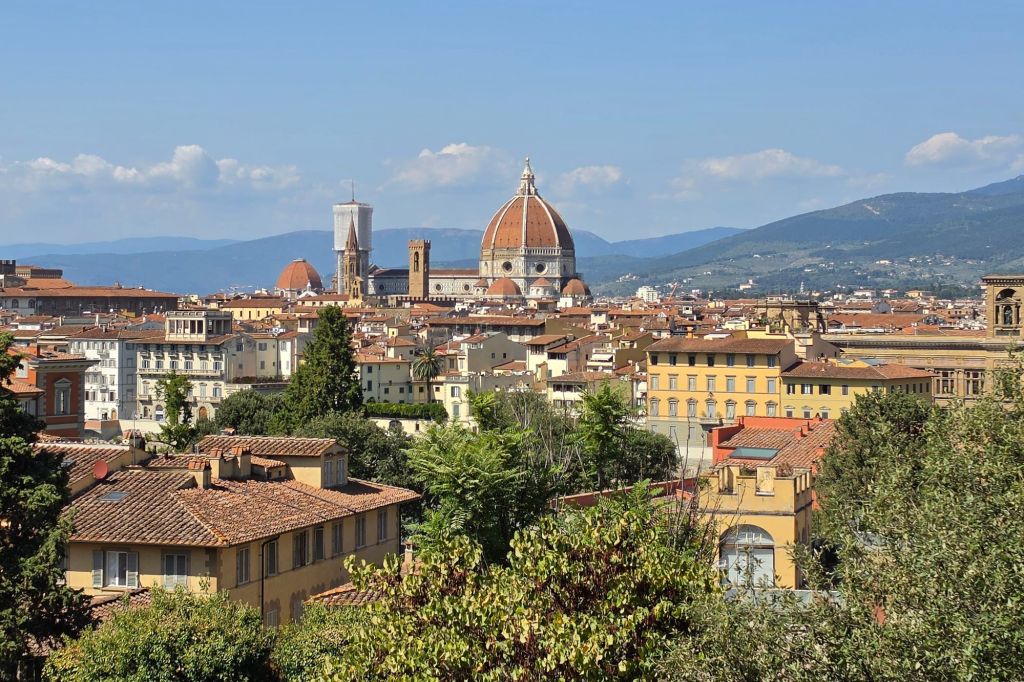
The city I’d spent the entire day walking through was beginning to unfold beneath me.
The Duomo was there.
The towers were there.
The terracotta rooftops I’d been looking across earlier from my Aperol were getting smaller.
And suddenly the climb didn’t seem quite so ridiculous.
Well.
It was still ridiculous.
But at least it was pretty.
CHECKPOINT REACHED.
Unfortunately, checkpoints aren’t finishing lines.
There was still more climbing to do.
So I continued upwards.
Hotter. Sweatier.
Increasingly convinced that if Ezio Auditore himself appeared and told me the mission had been cancelled, I would probably have told him to fuck off.
I was finishing it now out of principle.
And then, finally, the stairs ended.
I reached the top.
Viewpoint Synchronised
Piazzale Michelangelo was busy.
Of course it was.
But none of that really mattered when I turned around and saw the view.
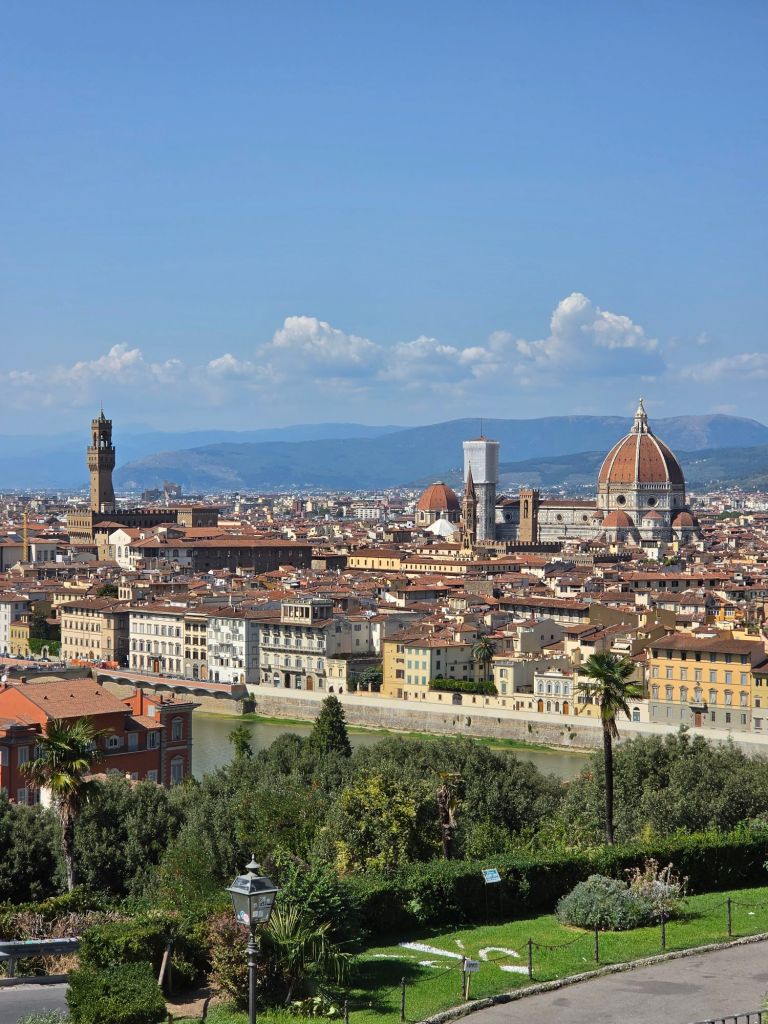
Florence was beneath me.
All of it.
The Arno cutting through the city. Ponte Vecchio crossing the water. Palazzo Vecchio rising above the rooftops. Santa Croce. And dominating everything, unmistakable even from up there, Brunelleschi’s dome.
Suddenly, my entire day existed in one view.
I’d been down there. I’d walked those streets. I’d stood beneath those buildings. I’d followed a story I’d first experienced through a video game and somehow turned it into a real day of my own.
And that was the part I hadn’t really expected.
I went to Florence because I love Assassin’s Creed II.
I wanted to see Ezio’s city.
I wanted those silly little moments of recognition, looking at a building and thinking, I’ve climbed that, despite very obviously never having climbed that.
And I got all of that.
But somewhere between Santa Maria Novella and the Medici palace, between the Duomo and Ponte Vecchio, between a rooftop Aperol and a tiny wine window, something shifted.
Florence stopped feeling like the setting of one of my favourite games.
It became somewhere I’d actually been.
Somewhere I’d made my own memories.
There was the café where I fuelled up for my mission.
The sugar packet with Palazzo Vecchio on it.
The little red leather bag I’d found along the way.
The rooftop where I’d sat with an Aperol and looked across a skyline I’d known for years.
The tiny bell I’d rung at a wine window.
The completely unnecessary third spritz.
The even more unnecessary limoncello.
The emergency bread.
And, finally, the fucking hill.
All of it was mine now.
I stood at Piazzale Michelangelo looking out over Firenze, sweaty, slightly sun-baked and extremely pleased with myself.
And somewhere in my head, I could practically hear it.
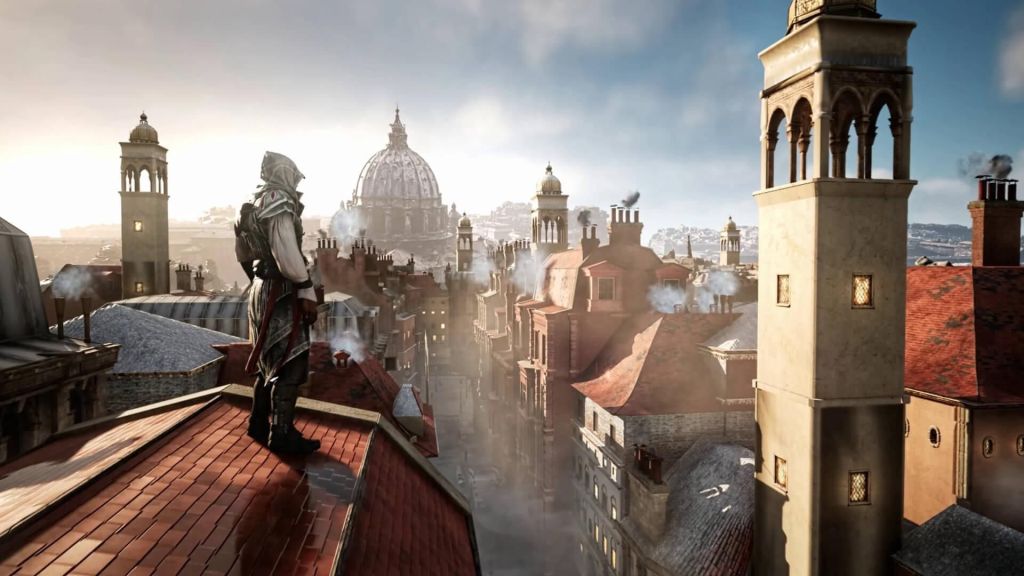
VIEWPOINT SYNCHRONISED.
I’d come to Florence looking for Ezio Auditore da Firenze.
Instead, I’d found my own version of his city.
Not Renaissance Florence.
Not Ubisoft’s Florence.
Mine.
And I think that’s why this day will stay with me for a very long time.
Sometimes the places we fall in love with through books, films or games remain fictional worlds that we visit for a few hours from our sofas.
And sometimes, if we’re very lucky, we get on a train and go looking for them.
I had.
SEQUENCE 100% SYNCHRONISED.
Requiescat in pace.
Come along for the next adventure.
Subscribe to Polka-Vita for new stories, travel diaries and everything in between.

 Polka-Vita
Leave a comment